



Overview
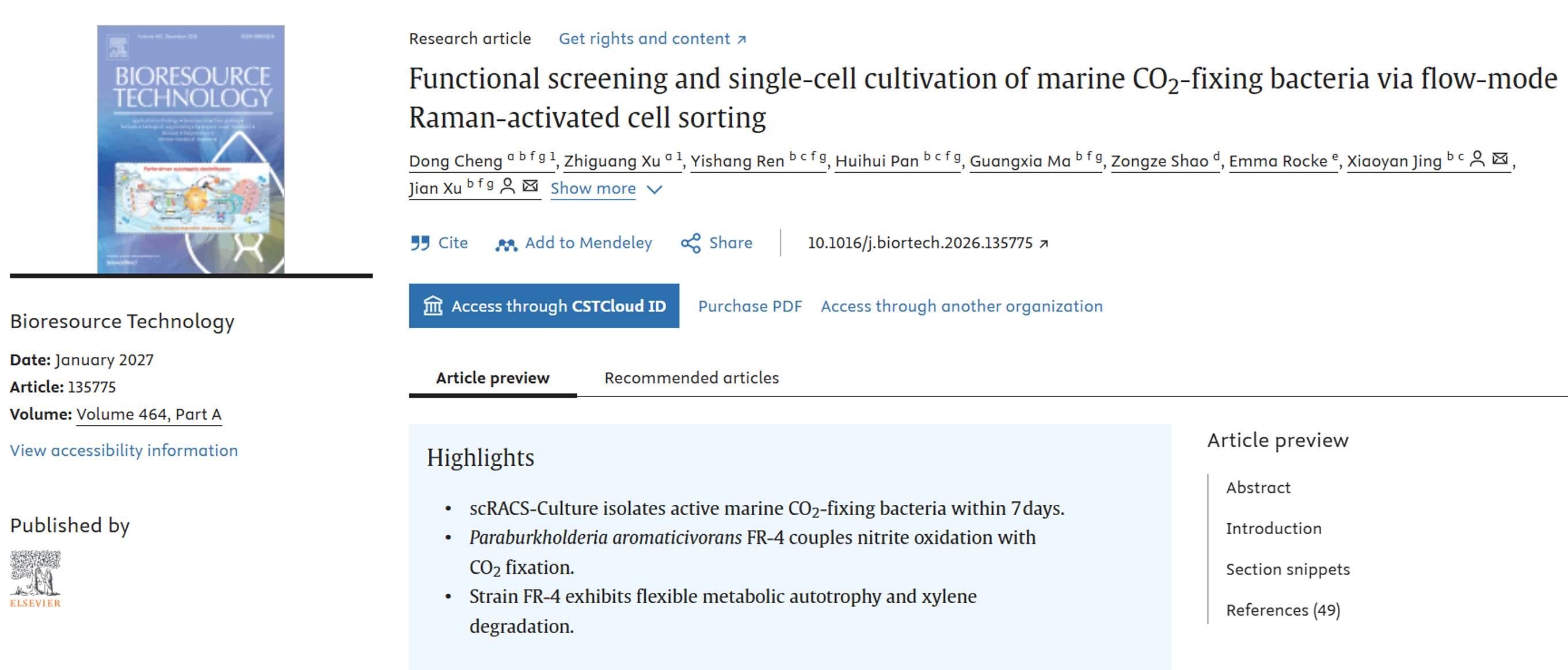
A groundbreaking study co-led by Qingdao University of Science and Technology, Qingdao Institute of Bioenergy and Bioprocess Technology (QIBEBT, CAS), and international partners has been published in the top-tier environmental journal Bioresource Technology.
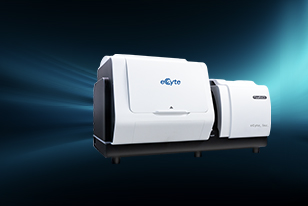
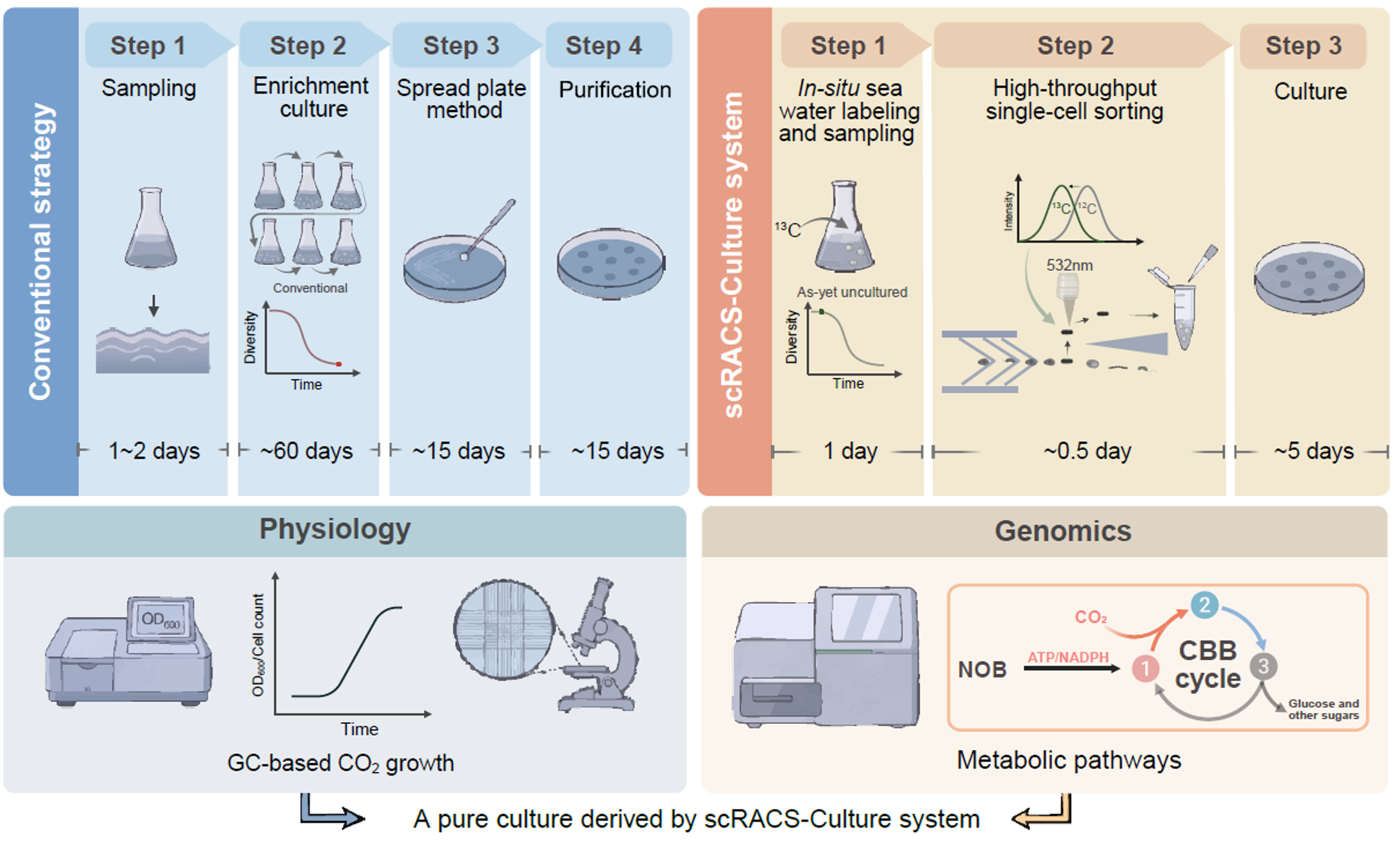
By leveraging eCyte’s FlowRACS (High-Throughput Raman-Activated Cell Sorting) platform, the research team successfully established an activity-driven single-cell cultivation workflow (scRACS-Culture). This approach enabled the direct isolation of 6 uncultivated, low-abundance carbon-fixing marine strains directly from Yellow Sea seawater—compressing the traditional isolation timeline from 90+ days down to under 7 days.
The Industry Challenge: Uncovering Microbial "Dark Matter"
Marine carbon-fixing microorganisms are vital drivers of the global biological carbon pump, yet over 99% remain uncultivated—representing a massive pool of microbial "dark matter."
Traditional functional strain discovery faces major hurdles:
Below Detection Limits: Low-abundance functional microbes often fall below the detection threshold of conventional 16S rRNA sequencing.
Flawed Enrichment Cultivation: Standard "enrichment-first" methods take months and selectively enrich fast-growing heterotrophs, frequently losing the true in situ functional bacteria.
Genotype vs. Activity Gap: Sequencing reveals genetic potential, but cannot prove whether a single cell is actively executing targeted carbon-fixing metabolic processes in its natural environment.
The eCyte FlowRACS Solution: Function-Driven Single-Cell Sorting
To overcome these limitations, the researchers integrated ¹³C-SIP (Stable Isotope Probing) with eCyte’s FlowRACS system, shifting the paradigm from enrichment-driven to activity-driven single-cell selection:
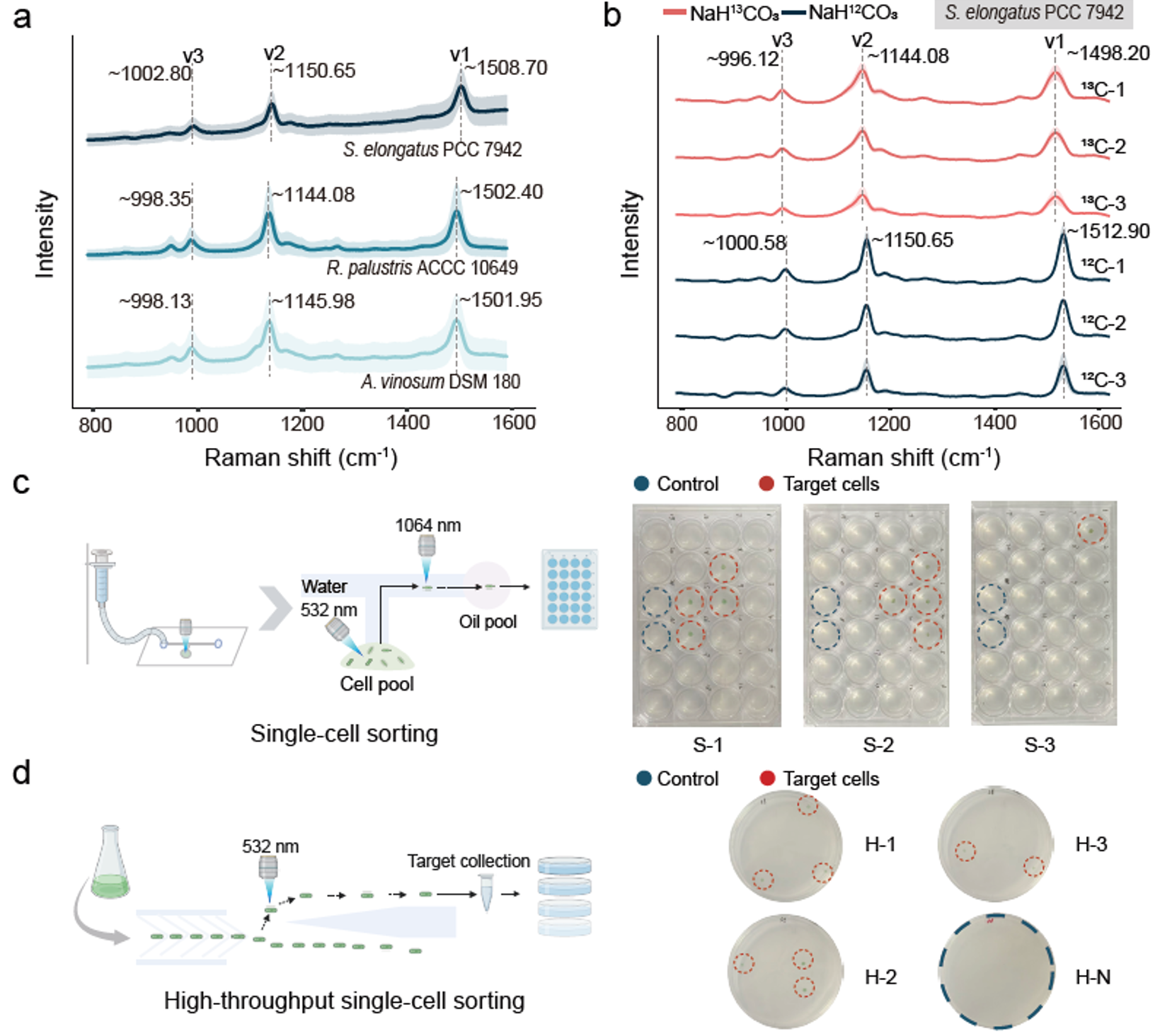
Label-Free Phenotypic Profiling: Active carbon-fixing cells incorporate ¹³C-NaHCO₃ into intracellular carotenoids, creating distinct Raman spectral shifts. FlowRACS directly reads this single-cell metabolic fingerprint without requiring fluorescence labeling or causing cell damage.
High-Precision Optical Sorting:Utilizing precise microfluidic optical sorting, FlowRACS captures target single cells while fully preserving their viability for downstream single-cell cultivation.
Ultra-Fast Workflow: By eliminating months of enrichment cycles, the team isolated active pure cultures in under 7 days.
Seamless Multi-Omics Integration: Connected single-cell metabolic phenotyping directly with strain isolation, whole-genome sequencing, and multi-omics analysis.
Key Discovery: Dual-Function Microbial Powerhouse
Multi-omics and physiological profiling confirmed that the flagship isolate, Paraburkholderia aromaticivorans FR-4, possesses rare metabolic plasticity:
Chemoautotrophic Carbon Fixation: Couples nitrite oxidation with CO₂ / bicarbonate fixation to thrive in carbon-starved ocean environments.
Pollutant Bioremediation: Efficiently degrades xylene as a sole carbon source, serving as a dual-action bio-resource for coastal petroleum contaminant remediation.
Empowering Global Life Science Research
This milestone demonstrates how eCyte’s FlowRACS platform bridges the gap between single-cell metabolic phenotyping and pure strain isolation. By unlocking the vast potential of uncultivated functional microorganisms, eCyte continues to empower researchers across oceanography, environmental biotechnology, synthetic biology, and biomanufacturing worldwide.