



eCyte, Inc. successfully co-hosted the 2026 Annual Symposium of the in-situ Metabolic Atlas Projects @ Single-cell (iMAPS) in Qingdao this week. Jointly organized with the Qingdao Institute of Bioenergy and Bioprocess Technology (QIBEBT), Chinese Academy of Sciences (CAS), and the Green Carbon Resources Utilization Committee of CIESC, the event brought together over 100 leading scholars, industry experts, and research partners to explore the latest advancements in Ramanomics, single-cell instrumentation, and microbial resource discovery.
Fostering Academic Exchange Across Four Core Disciplines
The symposium opened with welcoming remarks from Prof. MA Bo (QIBEBT), who highlighted the critical need to unite academic and industrial strengths to address bottlenecks in resolving in situ microbial functions. Prof. XU Jian (QIBEBT) presented an update on the roadmap and global reach of the iMAPS initiative, while Senior Engineer ZHENG Xiaoshan (QIBEBT) chaired the opening session and briefed attendees on fundamental Ramanomics technologies.
The conference featured technical sessions across four key application areas
Biomanufacturing & Synthetic Biology: Presentations by Prof. XU Yan (Jiangnan University), Prof. FENG Yingang (QIBEBT), and Prof. WANG Xixian (QIBEBT) covered fermented-food microbiome regulation, high-DHA Schizochytrium breeding, and high-throughput microbial consortia screening.
Nutrition & Health: Assoc. Prof. HUANG Shi (The University of Hong Kong) and Assoc. Prof. JIANG Shuaiming (Hainan University) addressed gut microbiome dynamics and tropical probiotic development.
Environment: Prof. LIN Lu (Shandong University), Assoc. Prof. JIANG Cancan (RCEES, CAS), Prof. LONG Hong'an (Ocean University of China), and Dr. WANG Yue (eCyte, Inc.) presented on lignocellulose-degrading microbe isolation, denitrifying organism identification, protozoan live-feed screening, and environmental functional strain discovery.
Agriculture: Prof. JIA Zhongjun (IGA, CAS), Mr. ZHANG Daoshun (IARRP, CAAS), and eCyte solutions specialist ZHU Pengfei highlighted black-soil health assessment, single-cell Raman identification of agricultural germplasm, and AI-enabled soil microecosystem platforms.
Exclusive Corporate Tour: Demonstrating Single-Cell Instrumentation Leadership
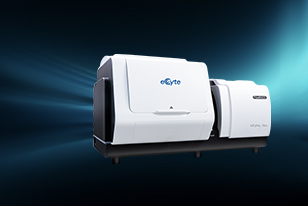
During the event, visiting scholars, partners, and clients were invited to tour eCyte’s production and R&D facilities. Attendees gained firsthand insight into eCyte’s precision manufacturing workflows, rigorous quality control standards, and commercialization pipeline for single-cell Raman spectroscopy (Ramanomics) and microfluidic sorting platforms. The tour underscored eCyte’s capability in translating cutting-edge single-cell analytical methods into robust, industrial-grade instruments.
One-on-One Client Sample Demos: Real-Time Performance Validation
To provide actionable insights into single-cell workflows, eCyte and QIBEBT application teams hosted personalized, one-on-one instrument operation and data analysis demo sessions on the next day.
Guided by eCyte application specialists and R&D engineers, participating clients tested their own complex samples—spanning industrial fermentation broth, gut microbiomes, agricultural soils, and marine environmental isolates. Through hands-on operation, attendees experienced the complete single-cell workflow, from in situ metabolic phenotyping to cell sorting and downstream single-cell genomics integration. The high throughput, resolution, and ease of operation demonstrated during the live demos generated strong interest, leading to several prospective research and commercial collaborations.
Looking Ahead
The symposium concluded with a strategic roundtable focused on iMAPS' stage-wise goals, technical standardization, data-sharing protocols, and industry-academia integration. As a core industry partner of the iMAPS initiative, eCyte remains committed to advancing single-cell analytical instrumentation, empowering global researchers to shift microbiome discovery from sequence-based prediction to direct, functional single-cell measurement.
Contact us and follow us for more videos on eCyte - YouTube and updates via LinkedIn.