

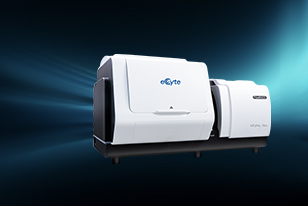


Antimicrobial resistance (AMR) has emerged as one of the top global health threats, as traditional antibiotics increasingly fail, phage therapy has become a beacon of hope. These specialized viruses target and eliminate drug-resistant bacteria with surgical precision, leaving the human microbiome unharmed.
However, rapidly matching the right phage to the right patient has long been a bottleneck. Clinicians and researchers face Three Critical Challenges:
(1) Host Range Determination: Rapidly screening phage infectivity against specific target strains. (2) Efficacy Ranking: Quantitatively ordering different phages by their lytic potency against the same strain. (3) Clinical Viability: Confirming whether the phage infection can self-sustain at achievable clinical dosages.
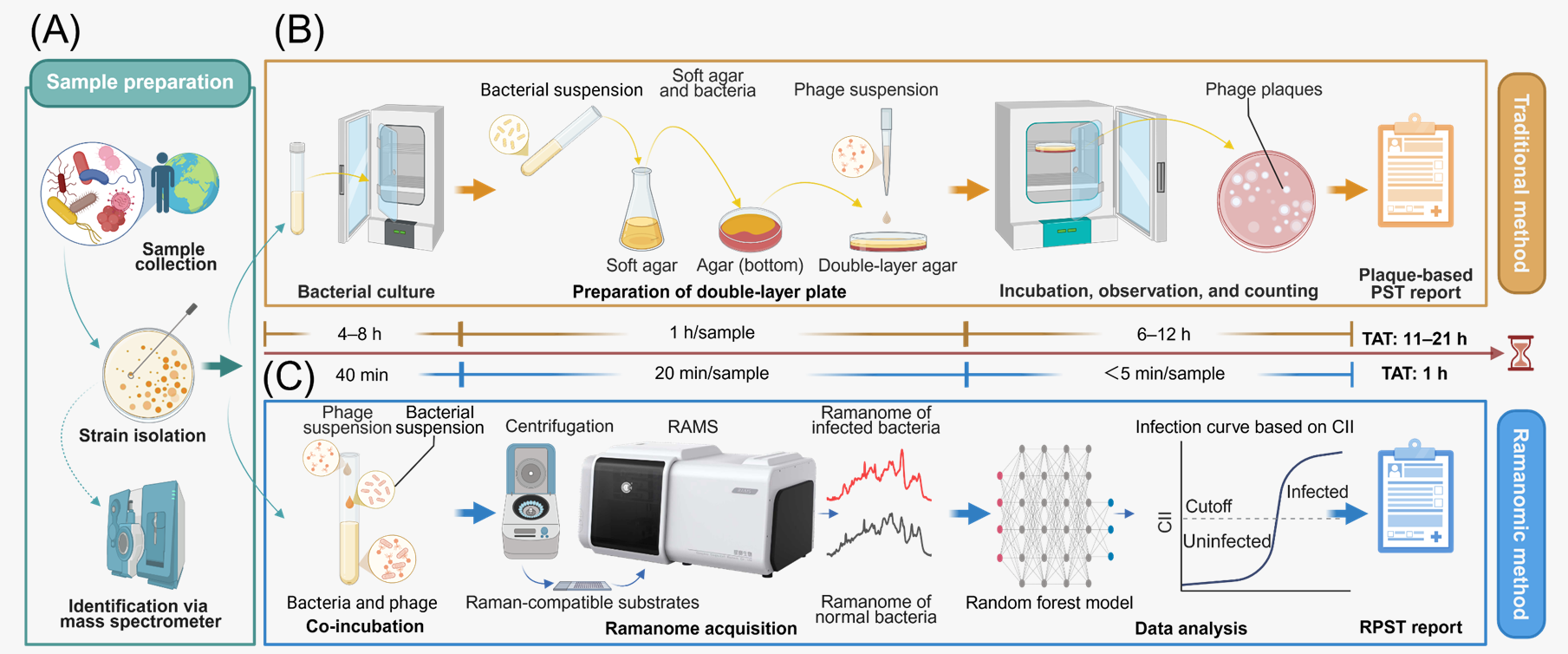
Traditional methods fall short. The gold-standard plaque assay takes 11–21 hours and only offers qualitative results. qPCR is fast but cannot measure actual infectivity. Flow cytometry offers high throughput but yields false positives because it cannot distinguish between productive and abortive infections.
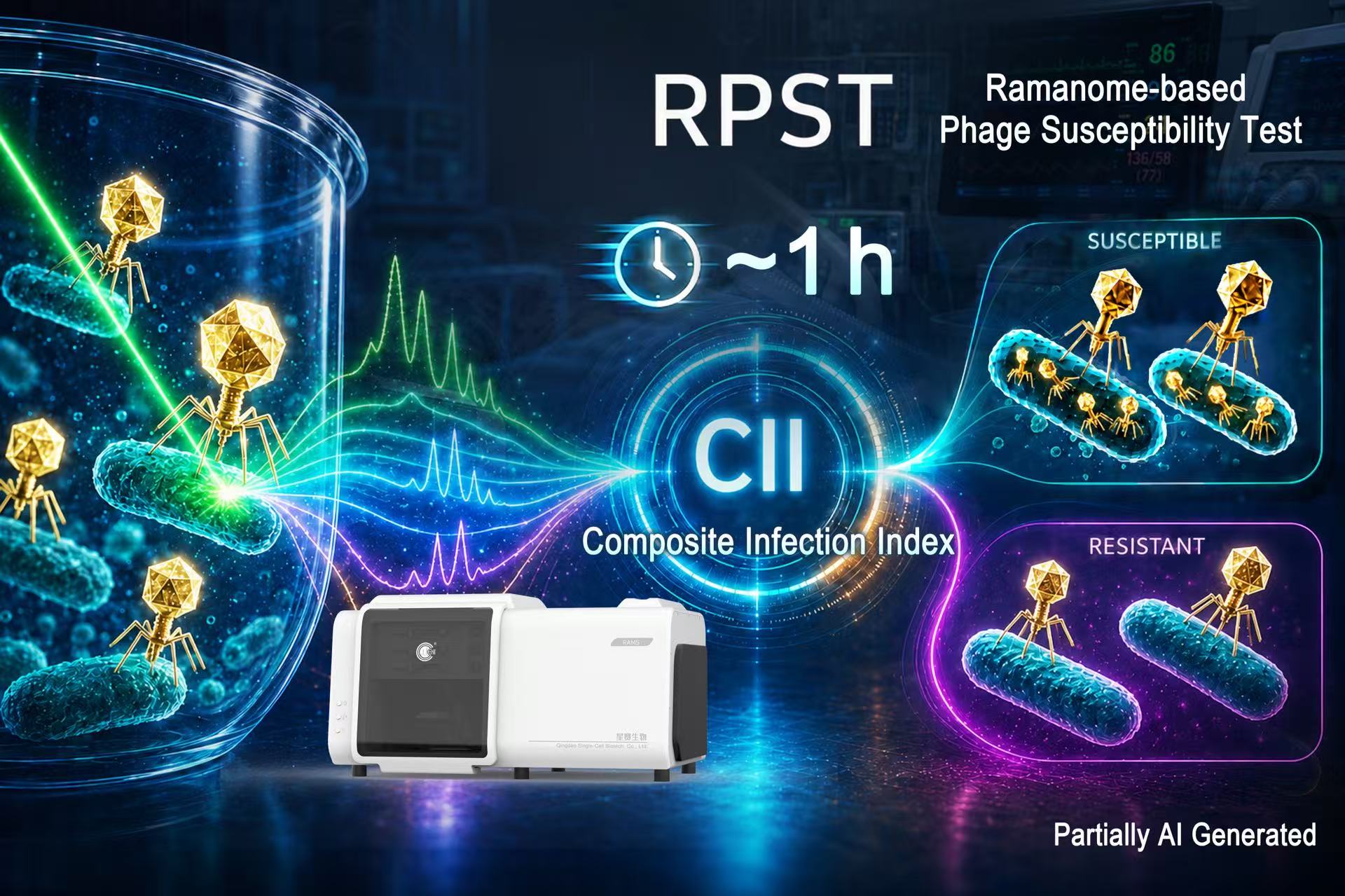
The Solution: RPST Decodes Infection via Raman "Fingerprints" of eCyte’s RAMS (Raman-Activated Microfluidic Sorter)
When a phage infects a bacterium, it triggers a characteristic reconfigurations of the host cell's nucleic acids, proteins, and lipids—leaving behind a unique "biochemical password." By capturing these dynamic metabolic changes, RPST delivers rapid, quantitative, and functional phage susceptibility profiles.
Three Core Advantages of RPST
1. Ultra-Fast: Results in 1 Hour
From phage-bacteria co-incubation and Raman spectral acquisition using RAMS to AI-driven computation and reporting (RamanAI), the entire workflow takes less than 60 minutes, 10x faster than traditional methods.
2. Quantitative: Precision Profiling of Phage Potency
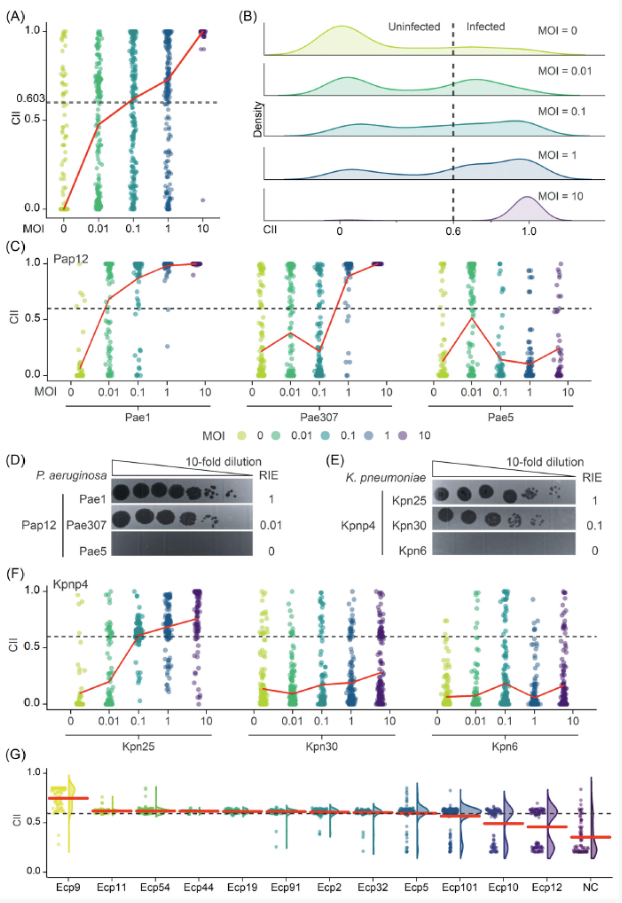
By utilizing the continuous numerical Cellular Intensity Index (CII), RPST eliminates vague qualitative guesswork. It provides a definitive, data-driven ranking of phage efficacy against a single resistant strain, allowing users to instantly identify the most potent candidate.
3. AI Modeling: Determining the Minimum Effective MOI
By tracking how the CII evolves over time across various concentrations, RPST precisely calculates the minimum Multiplicity of Infection (MOI) required to sustain self-amplifying infections. This provides critical, actionable data for clinical formulation, dosing, and frequency design.
Clinical Significance & Technology Leadership
RPST introduces a transformative tool for phage-host interaction research and clinical phage therapy. It is poised to accelerate related clinical studies and filings within modern regulatory frameworks. This breakthrough technology is powered by RAMS, independently developed by eCyte. From hardware engineering to AI algorithms, the entire technology stack is fully proprietary and vertically integrated, ensuring maximum reliability and control.
Contact us and follow us for more videos on eCyte - YouTube and updates via LinkedIn.