


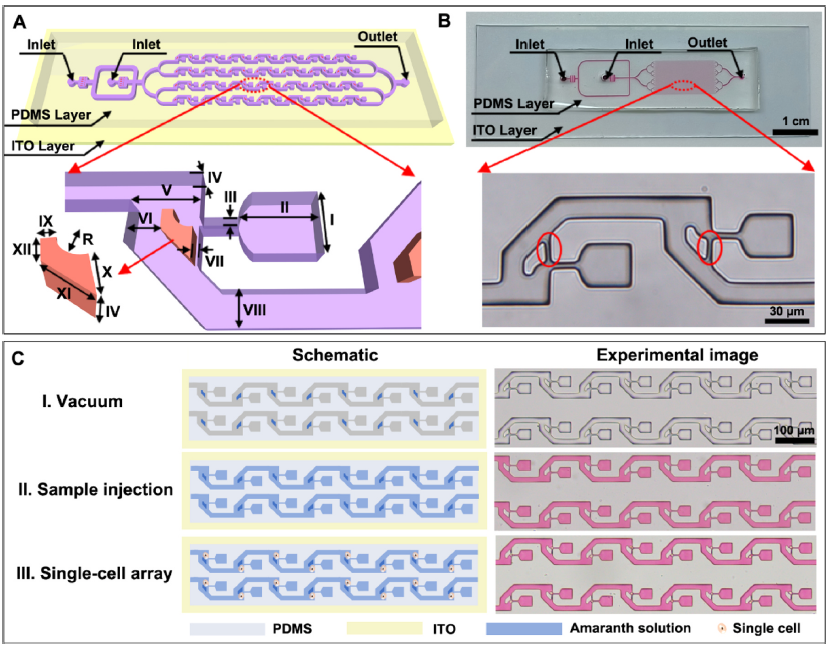
Utilizing Single-Cell Biotechnology's Digital Colony Picker (DCP), the research team designed a PDMS-ITO glass microfluidic array chip. This chip integrates four critical functions to achieve a comprehensive full-workflow upgrade 'from capture to sorting,' while maintaining controllable costs and high fabrication reproducibility.
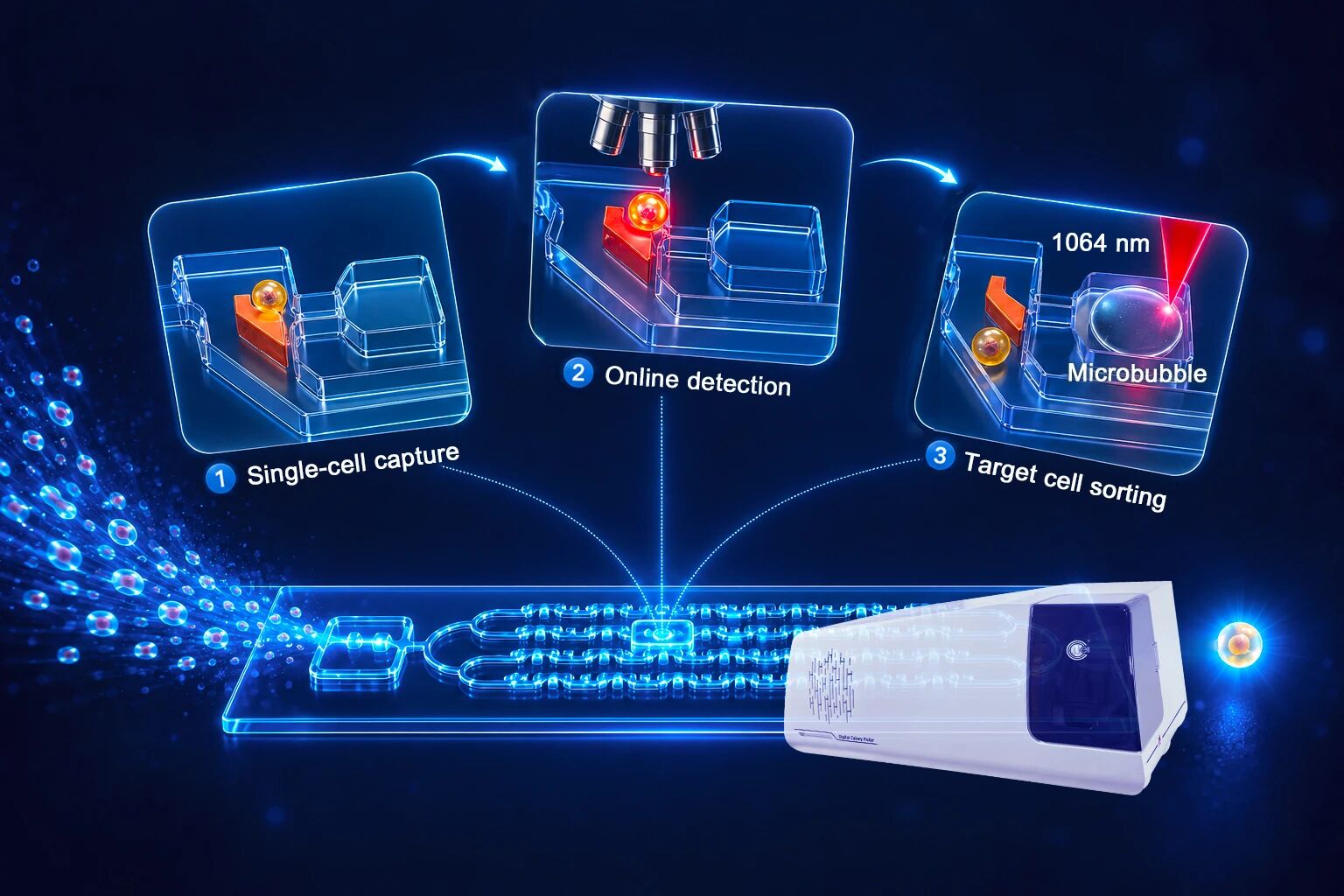
New Chip: Technical Highlights & Performance Upgrades
1. Single-Cell Capture: >93% Efficiency
8,192 Parallel Microstructures: Hydrodynamically optimized design.
Broad Compatibility: >93% average efficiency for 10–20 μm mammalian cells (RAW 264.7, HCT116, MCF7, etc.).
High Throughput: Simultaneous analysis of thousands of single cells on one chip.
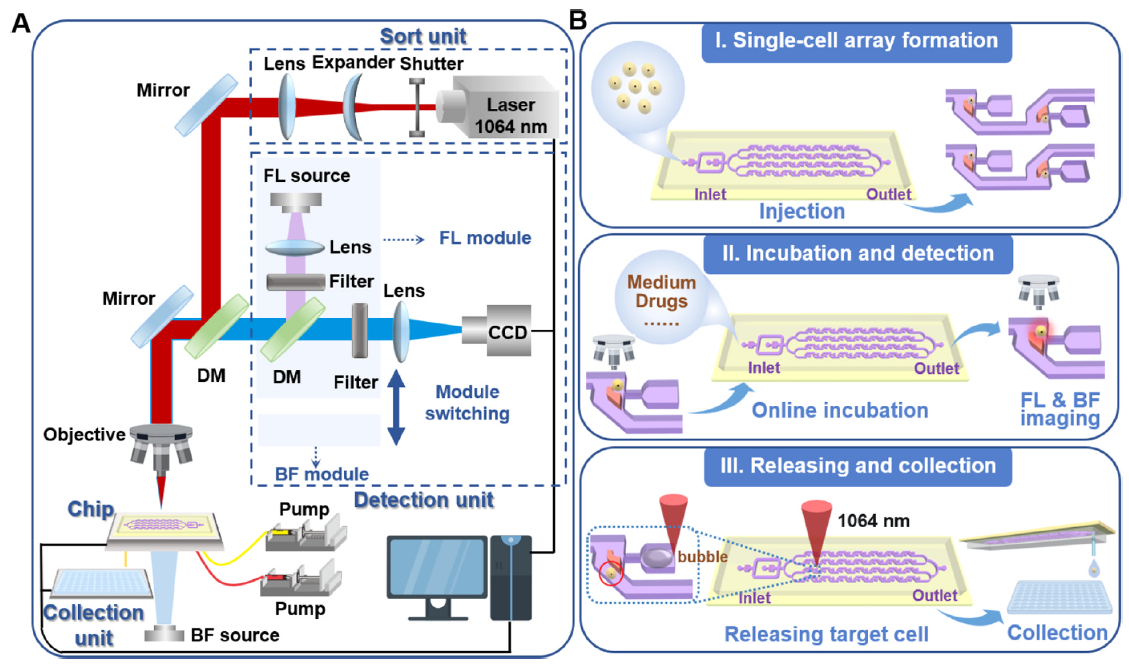
2. In Situ Incubation & Detection: >80% Viability
Integrated Workflow: On-chip media exchange, in situ staining, and long-term incubation.
Preserved Functions: >80% cell viability after 24h, retaining normal immunometabolism.
Dual-Mode Imaging: Real-time bright-field and fluorescence detection for dynamic phenotypes.
3. Laser Microbubble Recovery: >97% Release Rate
Precise Ejection: 1064 nm laser generates microbubbles on ITO glass, achieving >97% release efficiency across cell types.
Seamless Downstream Integration: Direct collection into 96-well plates for single-cell amplification and sequencing.
Gentle Handling: 100% non-contact and damage-free release and collection.
4. AI-Driven Identification: Auto-Locate & Filter
Deep Learning Powered: Automated microstructure positioning and cell recognition.
Smart Selection: Filter by fluorescence/phenotype to auto-locate targets, drastically boosting sorting efficiency.
Validation Case: Macrophage ROS Heterogeneity Study
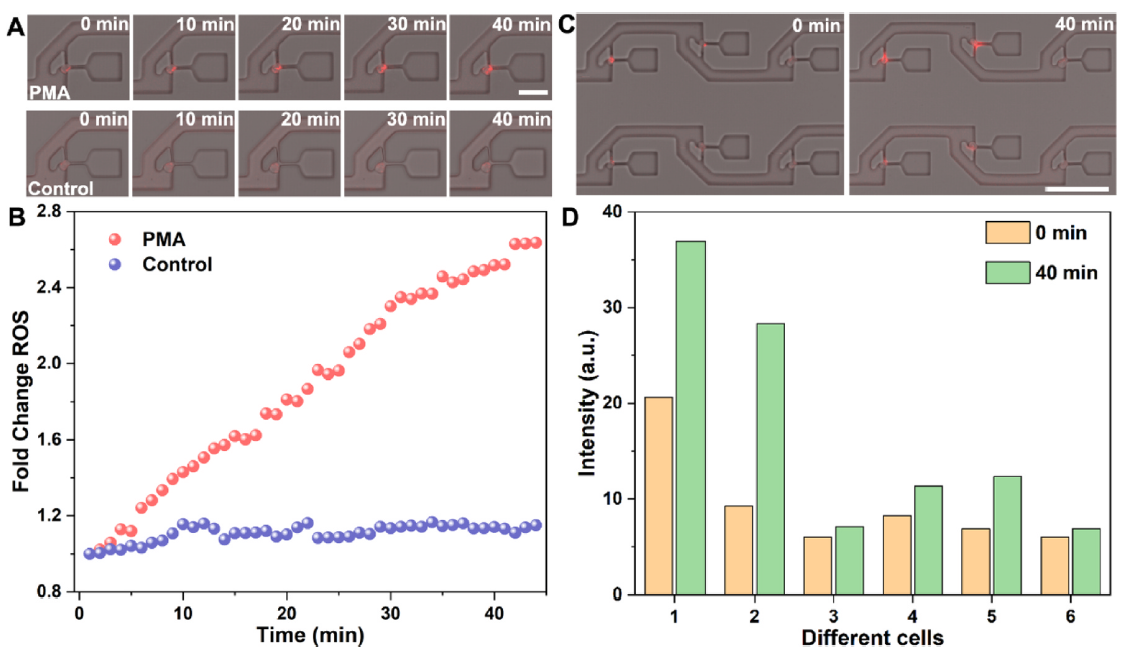
To demonstrate the platform's practical capabilities, the research team modeled the heterogeneity of reactive oxygen species (ROS) responses in macrophages stimulated by phorbol ester (PMA). By utilizing on-chip parallelization and real-time monitoring of single-cell fluorescence, they successfully captured significant variations in ROS response intensity across individual cells. Target cells exhibiting specific response profiles were then sorted and recovered for downstream analysis, demonstrating the platform’s robust capability in dissecting cellular heterogeneity and functional subtyping.