

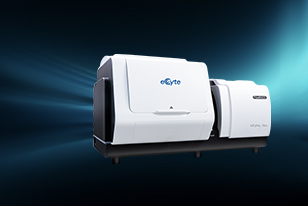


A research team from Jiangnan University and the Qingdao Institute of Bioenergy and Bioprocess Technology (QIBEBT), Chinese Academy of Sciences, has leveraged eCyte's single-cell Raman spectroscopy platform to reveal new insights into yeast metabolic dynamics during high-temperature Daqu fermentation. Published on December 16 in Bioresource Technology, the study demonstrates how different yeast species collaborate to maintain fermentation activity under extreme thermal conditions, challenging conventional assumptions about microbial abundance and functionality.

The Challenge: Identifying Who Is Actually "Working"
Led by Prof. XU Yan from Jiangnan University and Prof. XU Jian from QIBEBT, the study addressed a critical bottleneck in fermentation science. Traditional multi-omics approaches can reveal microbial composition but fail to distinguish which microorganisms are metabolically active—particularly under harsh conditions such as high temperature. This limitation has long hindered a mechanistic understanding of solid-state fermentation processes.
eCyte's Breakthrough: Activity-Based Single-Cell Resolution
By integrating the Ramanomics platform with deuterium oxide (D₂O) metabolic labeling, the team employed eCyte's core technology to track active yeast metabolism at the single-cell level. This approach enabled the isolation and identification of yeast species that remain metabolically functional throughout fermentation.
The results were striking: only 10–32% of the yeast species detected by DNA sequencing were actually metabolically active under heat stress. This finding overturns the conventional assumption that microbial abundance correlates directly with functional contribution.
"The ability to pinpoint metabolically active yeast at single-cell resolution is a game-changer," said ZHANG Huaizhi, the study's first author from Jiangnan University. "Our data show that even low-abundance species can play a vital role in maintaining fermentation stability, especially under extreme conditions."
Temporal Collaboration Among Yeast Species
The study also revealed a dynamic "shift change" among yeast species as fermentation temperatures evolved:
-
During moderate-temperature stages (<45°C): Saccharomycopsis fibuligera and Wickerhamomyces anomalus dominated, driving substrate degradation and flavor precursor synthesis.
-
As temperatures exceeded 45°C: Pichia kudriavzevii emerged as the dominant metabolically active yeast, demonstrating exceptional thermotolerance and sustained metabolic function.
This represents the first systematic mapping of temporal partitioning among yeast species in high-temperature fermentation, highlighting how low-abundance yet active microbes contribute to process stability.
Implications for Industry and Synthetic Biology
“This ability to profile the metabolic functions of live yeast cells and sort them directly from complex fermentation microbiota can transform how we monitor industrial fermentation and mine microbial cell factories,” said Prof. XU Jian, co-corresponding author from QIBEBT.
By enabling precise identification of functional microorganisms, eCyte's technology opens new avenues for optimizing fermentation efficiency in food production, bioenergy, and beyond. The platform combines single-cell resolution, non-destructive analysis, metabolic activity tracking, and live-cell sorting—all essential tools for next-generation bioprocessing and microbial resource mining.
For more information about eCyte's single-cell Raman platforms and applications, visit our website or contact the research team.