



eCyte, Inc. is proud to be a sponsor of the Bezos Centre for Sustainable Protein Annual Conference 2026 in London!
The Bezos Centre for Sustainable Protein Annual Conference 2026 (https://www.imperial.ac.uk/events/204897/bezos-centre-for-sustainable-protein-annual-conference-2026/), a leading international forum focusing on science, technology, investment, and policy toward a sustainable future, was held at the Queen Elizabeth II Centre in London on March 2-3, 2026. The conference serves the synthetic biology community across Europe and globally, and aims to create a sustainable, affordable, and resilient food system.
As part of our continued commitment to advancing sustainable protein research and synthetic biology, eCyte is thrilled to support the cutting-edge work being done at the Bezos Centre. Our Raman-Activated Cell Sorting (RACS) technology offers a fast, label-free approach for screening live cells based on their chemical signatures revealed by Raman spectroscopy. By integrating RACS with the Bezos Centre's initiatives, we are pushing the boundaries of sustainable protein research and contributing to the advancement of global food systems, addressing one of the most urgent challenges of our time: feeding the world sustainably.
eCyte is especially grateful for the ongoing support and collaboration with Professor Rodrigo Ledesma-Amaro, Director of the Bezos Centre for Sustainable Protein. Together, we are launching a core iMAPS (in-situ Metabolic Atlas Projects @ Single-cell, www.imaps.info) Showcase Lab in Synthetic Biology.
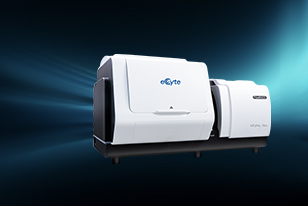
Inside the lab, FlowRACS (Flow Cytometric Raman-Activated Cell Sorter) instrument enables high-throughput, metabolic phenotype-based single-cell profiling and sorting. This instrument was featured in an isogenic heterogeneity study conducted in Dr. Ledesma-Amaro’s lab and published recently in Nature Communications (https://www.nature.com/articles/s41467-025-67408-x).
A recent addition to the lab, Digital Colony Picker (DCP), is a microfluidic device capable of highly parallel single-cell cultivation, screening, and sorting based on growth and functional phenotypes. Cells are cultivated in one of tens of thousands of physically separated pL-volume microchambers. AI-based analysis of brightfield (for clone morphology) and fluorescence (for function) images quickly identifies target clones, which are then exported using a contactless, laser-based approach.
The iMAPS Showcase Lab at the Bezos Centre provides access to this technology for the scientific community in Europe, and serves as a central hub for advancing research on the sustainable use of microbial metabolism, bringing together cutting-edge technologies and pioneering research..
We are excited to support the community’s research and development effort with this new facility, and look forward to how these advancements will shape the future of synthetic biology and sustainable protein production. The Bezos Centre’s leadership, combined with eCyte’s innovative technology, will continue to drive impactful advancements in sustainable protein research.
Stay tuned for updates on our collaboration at the conference and beyond.